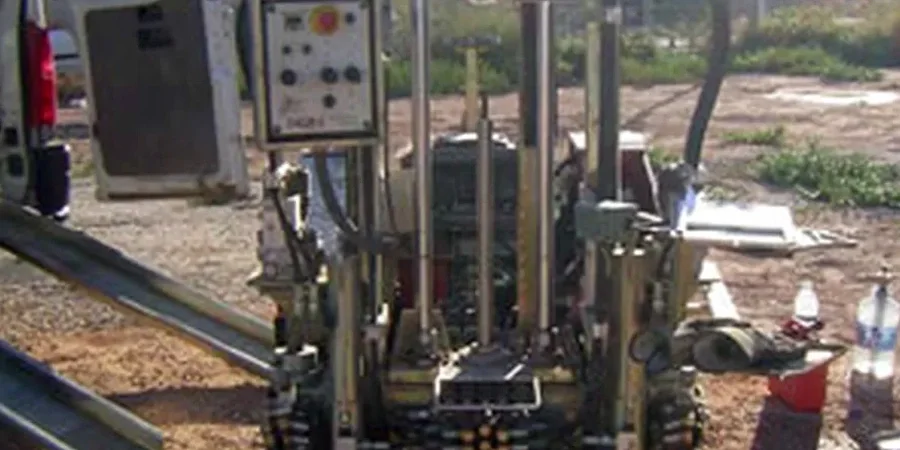
Saint-Jérôme grew fast once the railway arrived in 1876, and that expansion left us with a patchwork of soils—from dense glacial till on the higher terraces to soft alluvial silts along the Rivière du Nord. Building on either extreme without real data is a gamble. We run the CPT test directly on site with a 20-tonne hydraulic rig that pushes a 60-degree cone at a constant 2 cm/s rate, giving us tip resistance, sleeve friction, and pore pressure every centimetre. No boreholes, no sampling delay—just a continuous log that tells you exactly where the bearing layer starts and where the sensitive clay ends. For projects near the old industrial corridor where fill is common, we often pair CPT data with test pits to visually confirm the nature of that fill before foundation design begins.
Two centimetres per second, one reading per centimetre—our CPT rig delivers a soil profile with zero sampling gaps.
Process and scope
Site-specific factors
The rig we mobilize around Saint-Jérôme is a truck-mounted 20-tonne unit, and the first thing we check is the push system’s hydraulic pressure—if the rods start deflecting more than 2 degrees off vertical, the data loses reliability. In the clay zones south of Highway 158, we watch the pore pressure dissipation curves very closely. A slow decay after cone arrest often means undrained conditions, and that’s where the risk of misinterpreting shear strength becomes real. We also have a strict refusal protocol: when tip resistance spikes above 100 MPa for more than 30 consecutive centimetres, we stop immediately to avoid damaging the cone or losing a rod string in hard till. One broken rod in a deep push can turn a half-day job into a two-day recovery, and nobody wants that delay on their project timeline.
Reference standards
ASTM D5778-20 (Standard Test Method for Electronic Friction Cone and Piezocone Penetration Testing of Soils), CSA A23.3-19 (Design of Concrete Structures, referenced for foundation parameters derived from CPT), NBCC 2020 (National Building Code of Canada, Section 4.2 for geotechnical inputs)
Other technical services
Piezocone with Dissipation (CPTu)
Full piezocone testing with pore pressure dissipation at selected depths. We stop the push, hold the cone, and record the pressure decay over time. This gives you the coefficient of consolidation directly, which matters a lot in the Champlain clay where settlement can take years.
Soil Behaviour Type Classification
We process raw CPT logs through Robertson (1990) and updated SBTn charts to classify soil zones without a single lab sample. You get a colour strip log showing clay, silt, sand, or mixed layers per metre, ready for your geotechnical report.
CPT-Matched Lab Correlation
If your project needs lab strength numbers, we can run a triaxial test on a Shelby tube sample taken near a CPT location and correlate undrained shear strength (Su) with net cone resistance. This tightens your design parameters considerably.
Typical parameters
FAQ
How much does a CPT test cost in Saint-Jérôme?
For a single CPT sounding to 15–20 metres depth in the Saint-Jérôme area, you’re generally looking at CA$220 to CA$350 per test depending on access conditions and whether you need pore pressure dissipation pauses. If we’re doing multiple soundings on the same site, the per-test rate drops because mobilization is shared. Give us a call with your address and approximate depth needs—we’ll give you a firm number within the day.
Can CPT replace boreholes entirely for my Saint-Jérôme project?
It depends on the soil and the structure. In the sandy terraces north of downtown, CPT data often gives enough information for shallow foundation design without a single borehole. But in the Champlain clay zones, we usually recommend at least one borehole with undisturbed sampling to check sensitivity and organic content—things the cone cannot measure directly. We’ll help you decide what’s sufficient for your specific site.
How fast can I get the CPT report after field testing?
We upload raw data from the cone to our processing software right at the rig. Most clients receive a preliminary PDF log with SBT classification and key parameters within 48 hours of completing the field work. If you’re on a tight deadline, ask about same-day delivery and we’ll prioritize the file.